
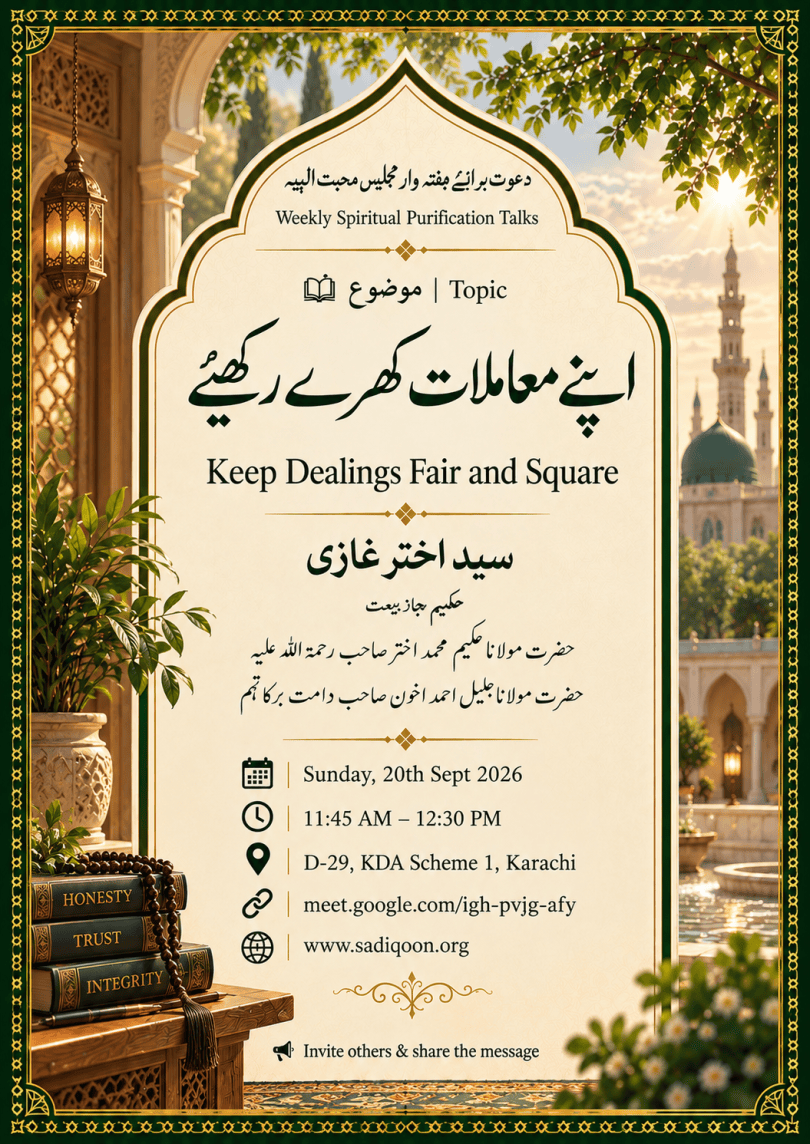
AI Generated English Summary
Today’s Bayan emphasized that faith and Taqwa must not be confined to acts of worship; they must also be reflected in our speech, promises, business dealings, debts, relationships, and everyday interactions.
Allah Almighty says:
يَا أَيُّهَا الَّذِينَ آمَنُوا اتَّقُوا اللَّهَ وَقُولُوا قَوْلًا سَدِيدًا
“O you who believe! Fear Allah and speak words that are straight and true.”
— Surah Al-Ahzab, 33:70
One of the important means of safeguarding our Taqwa is Qawl-e-Sadeed (قَوْلًا سَدِيدًا)—speech that is truthful, straight, clear and free from deception. A believer should therefore strive to keep his words and dealings upright, regardless of his profession or position in life.
The Messenger of Allah ﷺ said:
الدِّينُ النَّصِيحَةُ
“The religion is sincere counsel and goodwill.”
— Sahih Muslim
When the Companions رضي الله عنهم asked, “For whom?”, the Prophet ﷺ said:
لِلَّهِ، وَلِكِتَابِهِ، وَلِرَسُولِهِ، وَلِأَئِمَّةِ الْمُسْلِمِينَ وَعَامَّتِهِمْ
“For Allah, His Book, His Messenger, the leaders of the Muslims, and their common people.”
Thus, sincerity and goodwill should characterize our relationship with Allah, His Messenger ﷺ, and other Muslims. Our relationships should not merely be based upon what we can gain from others.
A fundamental requirement of upright dealings is truthfulness. Misrepresenting age, income or other important facts when arranging a marriage; presenting inferior goods as superior in business; concealing material facts when buying or selling property; saying, “I am only ten minutes away,” when one is actually an hour away; giving false assurances about repayment dates while borrowing money; or even promising a child an ice cream and deliberately failing to fulfil the promise—all reflect weaknesses in our dealings.
Allah تعالیٰ loves ease and good conduct in transactions. The Prophet ﷺ prayed:
رَحِمَ اللَّهُ رَجُلًا سَمْحًا إِذَا بَاعَ، وَإِذَا اشْتَرَى، وَإِذَا اقْتَضَى
“May Allah have mercy on a man who is easy-going when he sells, when he buys, and when he seeks repayment.”
— Sahih al-Bukhari
Many lies originate from greed and the desire for immediate worldly advantage. A person may apparently achieve his objective through dishonesty, but such success can be deprived of Barakah.
No worldly equation can compensate for the loss of Barakah. With Barakah, little can become immensely beneficial; without Barakah, even abundance can lose its value.
The Bayan also mentioned the great care exercised by Hazrat Maulana Ashraf Ali Thanvi رحمہ اللہ in matters involving the rights of others, including the example of ensuring that a seemingly minor charge relating to wood during a train journey was paid. Such incidents demonstrate how seriously the pious regarded even apparently insignificant rights and financial obligations.
Disloyalty in dealings is not the character of a believer. We should not treat someone exceptionally well while we need them and then become indifferent once our purpose has been served. The principle of:
الدِّينُ النَّصِيحَةُ
reminds us that relationships should be founded upon sincerity, loyalty and genuine goodwill—not merely convenience and self-interest.
Particular caution was also advised regarding debt. Debt should not unnecessarily become a way of life, and interest-bearing debt must especially be avoided. The desire for a house, car or higher standard of living should not lead a believer into transactions prohibited by Allah.
Regarding Riba (interest/usury), Allah Almighty gives an exceptionally severe warning:
فَإِن لَّمْ تَفْعَلُوا فَأْذَنُوا بِحَرْبٍ مِّنَ اللَّهِ وَرَسُولِهِ
“And if you do not, then be informed of a war from Allah and His Messenger.”
— Surah Al-Baqarah, 2:279
A person cannot expect true peace and tranquillity by knowingly entering into a course that brings such a warning from Allah and His Messenger ﷺ.
The Bayan also stressed the importance of documenting debts and financial obligations. Allah Almighty says concerning debt:
يَا أَيُّهَا الَّذِينَ آمَنُوا إِذَا تَدَايَنتُم بِدَيْنٍ إِلَىٰ أَجَلٍ مُّسَمًّى فَاكْتُبُوهُ
“O you who believe! When you contract a debt for a specified term, write it down.”
— Surah Al-Baqarah, 2:282
Therefore, debts, repayment obligations and other financial commitments should be recorded clearly and without ambiguity. Outstanding debts should also be carefully mentioned in one’s will so that the rights of others are not lost after one’s death.
Likewise, we should not feel embarrassed about properly documenting financial matters or about distributing inheritance according to the commands of Allah. Social pressure, family sensitivities or fear of what people may say should never cause us to neglect another person’s legitimate rights.
A very large portion of our lives consists of Mu‘amalat (معاملات)—our dealings with other people. We therefore need to be deeply concerned not only about our Salah, fasting and other acts of worship, but also about the truthfulness of our words, the reliability of our promises, the transparency of our business, the clarity of our debts, and the rights we owe to others.
Keep your dealings fair and square.
Let our words be truthful, our promises dependable, our transactions transparent and our relationships sincere—so that neither the rights of people remain upon us nor do our dealings become a cause of accountability and regret before Allah Almighty.
آج کے بیان کا خلاصہ
اپنے معاملات کھرے رکھیں
آج کے بیان کا بنیادی پیغام یہ تھا کہ ایمان اور تقویٰ کا اثر صرف عبادات تک محدود نہیں، بلکہ ہماری گفتگو، وعدوں، کاروبار، قرض، رشتوں اور روزمرہ کے تمام معاملات میں ظاہر ہونا چاہیے۔
اللہ تعالیٰ ارشاد فرماتے ہیں:
يَا أَيُّهَا الَّذِينَ آمَنُوا اتَّقُوا اللَّهَ وَقُولُوا قَوْلًا سَدِيدًا
’’اے ایمان والو! اللہ سے ڈرو اور سیدھی، درست بات کہا کرو۔‘‘
— سورۃ الأحزاب، 33:70
تقویٰ کی حفاظت کا ایک اہم ذریعہ قولِ سدید (قَوْلًا سَدِيدًا) ہے؛ یعنی انسان کی بات سچی، سیدھی، واضح اور ہر قسم کے فریب سے پاک ہو۔ انسان زندگی کے جس شعبے میں بھی ہو، دوسروں کے ساتھ اس کا تعلق اخلاص اور خیر خواہی پر قائم ہونا چاہیے۔
رسول اللہ ﷺ نے فرمایا:
الدِّينُ النَّصِيحَةُ
’’دین خیر خواہی ہے۔‘‘
— صحیح مسلم
صحابۂ کرام رضی اللہ عنہم نے عرض کیا: کس کے لیے؟ آپ ﷺ نے فرمایا:
لِلَّهِ، وَلِكِتَابِهِ، وَلِرَسُولِهِ، وَلِأَئِمَّةِ الْمُسْلِمِينَ وَعَامَّتِهِمْ
’’اللہ کے لیے، اس کی کتاب کے لیے، اس کے رسول کے لیے، مسلمانوں کے ائمہ کے لیے اور عام مسلمانوں کے لیے۔‘‘
لہٰذا ہمارے تعلقات محض ذاتی مفاد اور ضرورت پر نہیں بلکہ اخلاص، وفاداری اور خیر خواہی پر قائم ہونے چاہئیں۔
معاملات کی درستی کا ایک بنیادی اصول سچائی ہے۔ رشتہ طے کرتے وقت شادی کی عمر، آمدن یا دوسرے اہم حقائق غلط بتانا یا چھپانا؛ کاروبار میں گھٹیا چیز کو عمدہ ظاہر کرکے دھوکا دینا؛ زمین کی خرید و فروخت میں حقیقت چھپانا؛ یہ کہنا کہ ’’میں دس منٹ میں پہنچ رہا ہوں‘‘ جبکہ حقیقتاً ایک گھنٹہ دور ہوں؛ قرض لیتے وقت واپسی کی تاریخ یا شرائط کے بارے میں غلط بیانی کرنا؛ حتیٰ کہ بچے سے یہ کہنا کہ ’’یہ کام کرلو تو آئس کریم دوں گا‘‘ اور پھر وعدہ پورا نہ کرنا—یہ سب معاملات کی خرابی کی مختلف صورتیں ہیں۔
اللہ تعالیٰ کو وہ شخص پسند ہے جو خرید و فروخت اور معاملات میں آسانی اختیار کرے۔ رسول اللہ ﷺ نے فرمایا:
رَحِمَ اللَّهُ رَجُلًا سَمْحًا إِذَا بَاعَ، وَإِذَا اشْتَرَى، وَإِذَا اقْتَضَى
’’اللہ اس شخص پر رحم فرمائے جو بیچتے وقت، خریدتے وقت اور اپنا حق طلب کرتے وقت نرمی اور آسانی اختیار کرے۔‘‘
— صحیح البخاری
اکثر جھوٹ کے پیچھے لالچ اور کسی وقتی فائدے کی خواہش ہوتی ہے۔ بظاہر انسان کا کام بن بھی جائے، لیکن جھوٹ اور لالچ سے حاصل ہونے والا فائدہ برکت سے محروم ہوسکتا ہے۔
بے برکتی کو آپ کسی equation میں compensate نہیں کرسکتے۔ برکت ہو تو مٹی بھی سونا بن جاتی ہے، اور بے برکتی ہو تو سونا بھی مٹی بن جاتا ہے۔
بیان میں حضرت مولانا اشرف علی تھانوی رحمہ اللہ کی معاملات میں غیر معمولی احتیاط کا واقعہ بھی ذکر ہوا کہ آپؒ نے ٹرین کے سفر میں لکڑی سے متعلق حق/کرایہ بھی ادا کروایا۔ اس سے یہ سبق ملتا ہے کہ اللہ والوں کی نگاہ میں کسی کا حق معمولی نہیں ہوتا؛ وہ چھوٹے سے چھوٹے معاملے میں بھی جواب دہی کا احساس رکھتے ہیں۔
معاملات میں بے وفائی ایمان والوں کی فطرت نہیں۔ ایسا نہ ہو کہ جب کسی سے کام ہو تو اسے سر پر چڑھا لیا جائے اور جب کام نکل جائے تو طوطا چشمی اور بے رخی اختیار کرلی جائے۔ یہاں رسول اللہ ﷺ کا یہ فرمان ہمیشہ سامنے رہنا چاہیے:
الدِّينُ النَّصِيحَةُ
’’دین خیر خواہی ہے۔‘‘
یعنی ہمارا تعلق لوگوں سے صرف اپنی ضرورت اور مفاد تک محدود نہیں ہونا چاہیے۔
قرض کے بارے میں بھی خصوصی احتیاط کی تاکید کی گئی۔ بلا ضرورت قرض کو طرزِ زندگی نہیں بنانا چاہیے، خصوصاً سودی قرض سے سختی سے بچنا چاہیے۔ گھر، گاڑی یا بہتر معیارِ زندگی کی خواہش انسان کو ایسے قرض میں مبتلا نہ کردے جو اللہ تعالیٰ کے حکم کے خلاف ہو۔
سود کے بارے میں اللہ تعالیٰ کا نہایت سخت ارشاد ہے:
فَإِن لَّمْ تَفْعَلُوا فَأْذَنُوا بِحَرْبٍ مِّنَ اللَّهِ وَرَسُولِهِ
’’پھر اگر تم ایسا نہ کرو تو اللہ اور اس کے رسول کی طرف سے جنگ کے لیے خبردار ہوجاؤ۔‘‘
— سورۃ البقرۃ، 2:279
اللہ اور اس کے رسول ﷺ سے جنگ مول لے کر حقیقی سکون اور اطمینان حاصل نہیں کیا جاسکتا۔
قرض، واجبات اور مالی ذمہ داریوں کو معمولی نہیں سمجھنا چاہیے بلکہ انہیں واضح طور پر تحریر کرنا چاہیے۔ قرآنِ کریم میں اللہ تعالیٰ فرماتے ہیں:
يَا أَيُّهَا الَّذِينَ آمَنُوا إِذَا تَدَايَنتُم بِدَيْنٍ إِلَىٰ أَجَلٍ مُّسَمًّى فَاكْتُبُوهُ
’’اے ایمان والو! جب تم کسی مقررہ مدت تک کے لیے آپس میں قرض کا معاملہ کرو تو اسے لکھ لیا کرو۔‘‘
— سورۃ البقرۃ، 2:282
لہٰذا قرض، اس کی واپسی کی تاریخ، مالی ذمہ داریاں اور دوسرے معاہدے صاف، واضح اور غیر مبہم انداز میں تحریر کیے جائیں۔ اپنے ذمہ موجود قرض کا وصیت میں بھی اہتمام سے ذکر کیا جائے تاکہ انسان کے انتقال کے بعد کسی کا حق ضائع نہ ہو۔
اسی طرح وراثت کی صحیح تقسیم اور قرض کی تحریر میں نہ شرمائیں اور نہ لوگوں کی پروا کو اللہ تعالیٰ کے حکم پر مقدم کریں۔ خاندانی دباؤ، رسم و رواج یا یہ خوف کہ لوگ کیا کہیں گے، کسی کے شرعی اور مالی حق کو ضائع کرنے کا سبب نہیں بننا چاہیے۔
ہماری زندگی کا بہت بڑا حصہ معاملات سے جڑا ہوا ہے۔ اس لیے ہمیں صرف یہ فکر نہیں ہونی چاہیے کہ ہماری نماز، روزہ اور دوسری عبادات کیسی ہیں، بلکہ یہ بھی دیکھنا چاہیے کہ ہماری زبان کتنی سچی ہے، ہمارے وعدے کتنے پکے ہیں، ہمارے کاروبار کتنے شفاف ہیں، ہمارے قرض کتنے واضح ہیں، اور دوسروں کے حقوق کے معاملے میں ہم کتنے دیانت دار ہیں۔
اپنے معاملات کھرے رکھیں۔
اپنی بات سچی، وعدہ پکا، کاروبار صاف، قرض واضح اور تعلقات مخلصانہ رکھیے، تاکہ نہ کسی بندے کا حق ہمارے ذمہ باقی رہے اور نہ ہمارے معاملات قیامت کے دن اللہ تعالیٰ کے سامنے شرمندگی اور باز پرس کا سبب بنیں۔

