
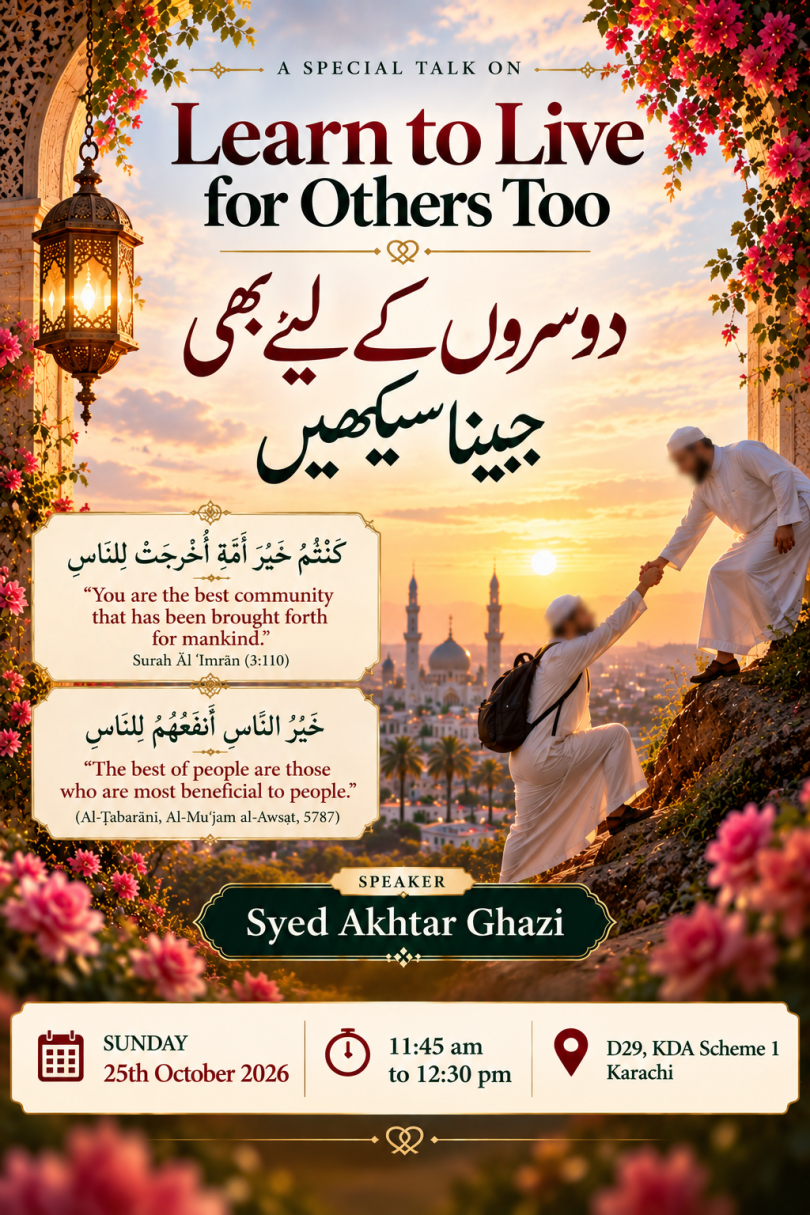
دوسروں کے لیے بھی جینا سیکھیں
English Summary
The Distinguishing Character of the Ummah: Being Beneficial to Humanity
Allah Almighty has honoured the Ummah of Prophet Muhammad ﷺ with a remarkable distinction: it has been raised for the benefit of humanity. A believer should not live merely for personal comfort, interests and ambitions, but should also be concerned about the welfare, happiness and difficulties of others.
Allah Almighty says:
كُنْتُمْ خَيْرَ أُمَّةٍ أُخْرِجَتْ لِلنَّاسِ تَأْمُرُونَ بِالْمَعْرُوفِ وَتَنْهَوْنَ عَنِ الْمُنْكَرِ وَتُؤْمِنُونَ بِاللَّهِ
“You are the best community that has been brought forth for mankind: You enjoin what is right and forbid what is wrong, and you believe in Allah.”
Surah Āl ʿImrān (3:110) — English translation based on The Noble Qur’an by Mufti Muhammad Taqi Usmani.
The expression “brought forth for mankind” is particularly meaningful. This Ummah is not meant to be self-centred. Its excellence lies in faith, righteousness, sincere concern for others and efforts to bring goodness into people’s lives.
A narration states:
خَيْرُ النَّاسِ أَنْفَعُهُمْ لِلنَّاسِ
“The best of people are those who are most beneficial to people.”
Reference: Al-Muʿjam al-Awsaṭ, al-Ṭabarānī, Hadith 5787 (numbering may vary by edition).
Human Beings Are Created for Companionship
Human beings naturally seek companionship, affection and belonging. The creation of Sayyidah Hawwāʾ (Eve), peace be upon her, as a companion for Sayyidunā Ādam, peace be upon him, reminds us of the importance of human relationships.
Allah Almighty says:
هُوَ الَّذِي خَلَقَكُمْ مِنْ نَفْسٍ وَاحِدَةٍ وَجَعَلَ مِنْهَا زَوْجَهَا لِيَسْكُنَ إِلَيْهَا
“He is the One who created you from a single soul and made from it its spouse, so that he might find comfort in her.”
Surah Al-Aʿrāf (7:189) — Meaning based on Mufti Taqi Usmani’s translation.
Living together requires consideration, patience, mutual respect and certain rules of conduct. Persistent isolation can deprive people of valuable companionship and support, although solitude itself is not always harmful.
Islam does not encourage believers to abandon society as an ideal way of life. Even those pious elders who temporarily withdrew into solitude because of particular spiritual circumstances eventually returned to serve others.
Our beloved Prophet ﷺ lived among people, listened to their concerns, shared their difficulties and guided them towards Allah Almighty.
Helping Others Is an Act of Worship
Helping someone is not limited to financial assistance. Sometimes people need someone to listen patiently to their grief. Sometimes they need sincere advice, encouragement, a kind word or simply a heartfelt duʿā.
The Messenger of Allah ﷺ said:
وَاللَّهُ فِي عَوْنِ الْعَبْدِ مَا كَانَ الْعَبْدُ فِي عَوْنِ أَخِيهِ
“Allah continues to help the servant as long as the servant helps his brother.”
Reference: Ṣaḥīḥ Muslim, Hadith 2699.
The Prophet ﷺ also taught that whoever relieves a believer of a worldly difficulty, Allah will relieve him of a difficulty on the Day of Resurrection. This is also narrated in Ṣaḥīḥ Muslim, Hadith 2699.
Every opportunity to relieve someone’s distress should therefore be considered an opportunity to seek Allah’s pleasure.
Sincere Advice Must Benefit the Person Seeking It
When someone asks us for advice, our responsibility is to consider what is genuinely beneficial for that person, rather than allowing our own interests to influence our recommendation.
The Prophet ﷺ said:
الْمُسْتَشَارُ مُؤْتَمَنٌ
“The person whose advice is sought is entrusted.”
Reference: Sunan Abī Dāwūd, Hadith 5128; Jāmiʿ al-Tirmidhī, Hadith 2822.
Giving advice for selfish gain is a betrayal of that trust and contrary to the noble character expected of this Ummah.
Religion Is Sincerity and Goodwill
The Messenger of Allah ﷺ said:
الدِّينُ النَّصِيحَةُ
The Companions asked:
لِمَنْ؟
He replied:
لِلَّهِ وَلِكِتَابِهِ وَلِرَسُولِهِ وَلِأَئِمَّةِ الْمُسْلِمِينَ وَعَامَّتِهِمْ
“Religion is sincere counsel.” We asked, “For whom?” He replied, “For Allah, His Book, His Messenger, the leaders of the Muslims and their common people.”
Reference: Ṣaḥīḥ Muslim, Hadith 55.
Sincerity towards Allah means devotion, obedience and faithfulness to His commands, even when fulfilling them becomes difficult. When we fall into sin, we should acknowledge our mistakes, repent sincerely and return to Him with humility and tears.
Sincerity towards people means wishing them well for the sake of Allah, rather than because of personal gain, emotional attachment or selfish desires.
Refraining from Harm Is Only the Beginning
At the very least, a believer must refrain from hurting others, whether through actions, harsh words, sarcasm, ridicule or repeated taunts.
However, merely avoiding harm is not the highest standard of Islamic character. It is the foundation upon which positive service and kindness should be built.
The Prophet ﷺ said:
مَنْ يُحْرَمِ الرِّفْقَ يُحْرَمِ الْخَيْرَ كُلَّهُ
“Whoever is deprived of gentleness is deprived of all good.”
Reference: Ṣaḥīḥ Muslim, Hadith 2592.
A soft heart is an extraordinary blessing from Allah. As a believer grows in religious commitment, kindness, compassion and concern for others should also increase.
Kindness Can Transform Hearts
An inspiring account is attributed to the great saint Sayyidunā Sarī al-Saqaṭī رحمه الله.
It is related that he once encountered a young man who had been drinking and was covered in vomit. Instead of humiliating or condemning him, he compassionately washed his face.
Later, he reportedly saw that young man in a dream, transformed into the appearance of a righteous person. According to the account, he heard a voice conveying that because he had washed the young man’s face for Allah’s pleasure, Allah had purified the young man’s heart.
Nevertheless, its moral is profound: we should not judge people only by their present weaknesses. Compassion may become a means through which Allah opens the doors of repentance and guidance.
The Greatest Service: Connecting Hearts to Allah
We must not become so absorbed in our personal comfort and job and businesses, spiritual routines or perceived accomplishments that we forget the suffering of those around us.
Come closer to people. Listen to their difficulties. Help them according to your ability. Give sincere advice and make duʿā for them.
Above all, the greatest service we can offer someone is to help strengthen their relationship with Allah Almighty.
When a person learns to turn to Allah through life’s joys, hardships, disappointments and uncertainties, they gain a source of strength and comfort that continues even when other people cannot help.
May Allah Almighty grant us sincere hearts, gentleness in our dealings, the ability to benefit His creation, and the wisdom to guide ourselves and others towards His pleasure. Āmīn.
اردو تلخیص
دوسروں کے لیے بھی جینا سیکھیں
امتِ محمدیہ ﷺ کی امتیازی شان: انسانیت کی خیرخواہی
اللہ تعالیٰ نے امتِ محمدیہ ﷺ کو خیرِ امت کے عظیم اعزاز سے نوازا ہے۔ اس اعزاز کا تقاضا یہ ہے کہ مسلمان صرف اپنی ذات، اپنی راحت اور اپنے مفادات کے لیے زندگی نہ گزارے، بلکہ اللہ تعالیٰ کی مخلوق کے لیے نفع بخش اور خیرخواہ بن کر زندگی گزارے۔
اللہ تعالیٰ ارشاد فرماتے ہیں:
كُنْتُمْ خَيْرَ أُمَّةٍ أُخْرِجَتْ لِلنَّاسِ تَأْمُرُونَ بِالْمَعْرُوفِ وَتَنْهَوْنَ عَنِ الْمُنْكَرِ وَتُؤْمِنُونَ بِاللَّهِ
ترجمہ: ’’تم بہترین امت ہو جو لوگوں کے فائدے کے لیے وجود میں لائی گئی ہے۔ تم نیکی کی تلقین کرتے ہو، برائی سے روکتے ہو، اور اللہ پر ایمان رکھتے ہو۔‘‘
حوالہ: سورۃ آل عمران، آیت 110 — آسان ترجمہ قرآن، مفتی محمد تقی عثمانی صاحب کے مفہوم کے مطابق۔
اس آیت میں خصوصیت کے ساتھ أُخْرِجَتْ لِلنَّاسِ فرمایا گیا، یعنی یہ امت انسانوں کے فائدے کے لیے وجود میں لائی گئی ہے۔ اس کی شان خودغرضی نہیں، بلکہ ایمان، نیکی کی دعوت، برائی سے روکنا اور مخلوق کی خیرخواہی ہے۔
ایک روایت میں ارشاد ہے:
خَيْرُ النَّاسِ أَنْفَعُهُمْ لِلنَّاسِ
ترجمہ: ’’لوگوں میں بہترین وہ ہے جو لوگوں کے لیے سب سے زیادہ نفع بخش ہو۔‘‘
حوالہ: المعجم الاوسط للطبرانی، حدیث 5787۔
انسان کی فطرت اور باہمی معاشرت
اللہ تعالیٰ نے انسان کی فطرت میں محبت، انسیت اور باہمی تعلق کی ضرورت رکھی ہے۔ حضرت آدم علیہ السلام کے لیے حضرت حوا علیہا السلام کو پیدا فرمانا بھی اس حقیقت کی طرف رہنمائی کرتا ہے کہ انسان کو سکون اور رفاقت کی ضرورت ہے۔
اللہ تعالیٰ ارشاد فرماتے ہیں:
هُوَ الَّذِي خَلَقَكُمْ مِنْ نَفْسٍ وَاحِدَةٍ وَجَعَلَ مِنْهَا زَوْجَهَا لِيَسْكُنَ إِلَيْهَا
ترجمہ: ’’وہی ہے جس نے تمہیں ایک جان سے پیدا کیا، اور اسی سے اس کا جوڑا بنایا، تاکہ وہ اس کے پاس سکون حاصل کرے۔‘‘
حوالہ: سورۃ الاعراف، آیت 189 — آسان ترجمہ قرآن کے مفہوم کے مطابق۔
انسان کو دوسرے انسانوں کے ساتھ رہنے کی ضرورت ہے۔ مسلسل تنہائی بعض اوقات بے چینی، اداسی اور نفسیاتی مشکلات کا سبب بن سکتی ہے۔ اسی لیے معاشرتی زندگی میں حقوق، آداب اور قوانین مقرر کیے جاتے ہیں تاکہ لوگ امن و سکون کے ساتھ رہ سکیں۔
اسلام میں بلا ضرورت سب سے الگ تھلگ ہوکر زندگی گزارنا کوئی عمومی قابلِ تقلید طریقہ نہیں۔ بعض بزرگ مخصوص روحانی احوال کے تحت وقتی طور پر خلوت نشین ہوئے، لیکن عام حالات میں مخلوق کے درمیان رہ کر ان کی خدمت کرنا ہی نبوی مزاج کے زیادہ قریب ہے۔
ہمارے آقا حضرت محمد مصطفیٰ ﷺ لوگوں کے درمیان رہتے، ان کی پریشانیاں سنتے، ان کی مدد فرماتے اور ان کی اصلاح و تربیت فرماتے تھے۔
دوسروں کی حاجت پوری کرنا عظیم عبادت ہے
کسی کی خدمت کا مطلب صرف مالی مدد کرنا نہیں۔ بعض اوقات کسی پریشان حال کی بات توجہ سے سن لینا، کسی غمزدہ کو تسلی دینا، کسی کو صحیح مشورہ دینا یا اس کے لیے خلوصِ دل سے دعا کرنا بھی بہت بڑی خدمت ہوتی ہے۔
رسول اللہ ﷺ نے ارشاد فرمایا:
مَنْ نَفَّسَ عَنْ مُؤْمِنٍ كُرْبَةً مِنْ كُرَبِ الدُّنْيَا نَفَّسَ اللَّهُ عَنْهُ كُرْبَةً مِنْ كُرَبِ يَوْمِ الْقِيَامَةِ
ترجمہ: ’’جو شخص کسی مومن کی دنیا کی پریشانیوں میں سے کوئی پریشانی دور کرے گا، اللہ تعالیٰ قیامت کے دن اس کی پریشانیوں میں سے ایک پریشانی دور فرمائیں گے۔‘‘
اسی حدیث میں ارشاد ہے:
وَاللَّهُ فِي عَوْنِ الْعَبْدِ مَا كَانَ الْعَبْدُ فِي عَوْنِ أَخِيهِ
ترجمہ: ’’اللہ تعالیٰ بندے کی مدد میں رہتے ہیں، جب تک بندہ اپنے بھائی کی مدد میں رہتا ہے۔‘‘
حوالہ: صحیح مسلم، حدیث 2699۔
یہ کتنی عظیم سعادت ہے کہ انسان کسی بندے کی مشکل آسان کرے اور اس کے بدلے اللہ تعالیٰ کی مدد کا مستحق بن جائے۔
مشورے میں اپنی نہیں، دوسرے کی خیرخواہی دیکھیے
مشورہ دینا بھی ایک امانت ہے۔ جب کوئی شخص ہم سے مشورہ مانگے تو ہمیں اس کے حالات، ضرورت اور فائدے کو سامنے رکھ کر مشورہ دینا چاہیے۔
رسول اللہ ﷺ کا ارشاد ہے:
الْمُسْتَشَارُ مُؤْتَمَنٌ
ترجمہ: ’’جس سے مشورہ لیا جائے، وہ امانت دار ہے۔‘‘
حوالہ: سنن ابی داؤد، حدیث 5128؛ جامع ترمذی، حدیث 2822۔
اگر مشورہ دینے والا اپنی منفعت، کاروباری فائدے، ذاتی تعلقات یا نفسانی خواہشات کو سامنے رکھ کر مشورہ دے تو وہ خیرخواہی کا حق ادا نہیں کرتا۔
خیرِ امت ہونے کا تقاضا یہ ہے کہ اپنے فائدے کے بجائے مشورہ مانگنے والے کی حقیقی بھلائی کو مقدم رکھا جائے۔
دین سراسر خیرخواہی ہے
رسول اللہ ﷺ نے ارشاد فرمایا:
الدِّينُ النَّصِيحَةُ
صحابہ کرام رضی اللہ عنہم نے عرض کیا:
لِمَنْ؟
آپ ﷺ نے فرمایا:
لِلَّهِ وَلِكِتَابِهِ وَلِرَسُولِهِ وَلِأَئِمَّةِ الْمُسْلِمِينَ وَعَامَّتِهِمْ
ترجمہ: ’’دین خیرخواہی کا نام ہے۔‘‘ صحابہ نے عرض کیا: کس کے لیے؟ فرمایا: ’’اللہ کے لیے، اس کی کتاب کے لیے، اس کے رسول کے لیے، مسلمانوں کے حکمرانوں اور عام مسلمانوں کے لیے۔‘‘
حوالہ: صحیح مسلم، حدیث 55۔
اللہ تعالیٰ اور رسول اللہ ﷺ کے ساتھ خیرخواہی اور اخلاص کا مطلب یہ ہے کہ ہمارا تعلق محبت، وفاداری، اطاعت اور سچائی پر قائم ہو۔
ایسا نہ ہو کہ جب دین پر چلنے میں کوئی مشکل پیش آئے تو ہم پیچھے ہٹ جائیں۔ اور اگر کبھی گناہ یا کوتاہی ہوجائے تو اپنی غلطی تسلیم کرکے، ندامت اور آنسوؤں کے ساتھ اللہ تعالیٰ سے معافی مانگیں اور دوبارہ اس کی طرف رجوع کریں۔
اسی طرح مخلوق کے ساتھ خیرخواہی بھی اللہ تعالیٰ کی رضا کے لیے ہونی چاہیے، نہ کہ کسی ذاتی غرض، مفاد یا نفسانی خواہش کے لیے۔
کسی کو تکلیف نہ دینا خیرخواہی کی ابتدائی منزل ہے
مخلوق کے ساتھ حسنِ سلوک کی پہلی منزل یہ ہے کہ ہماری زبان اور ہاتھ سے کسی کو تکلیف نہ پہنچے۔
بات بات پر طنز کرنا، طعنے دینا، دوسروں کی تحقیر کرنا، ان کی کمزوریوں کو اچھالنا اور ان کے دل دکھانا کسی مومن کا شیوہ نہیں۔
لیکن یہ بات بھی یاد رہے کہ کسی کو تکلیف نہ دینا خیرخواہی کی آخری منزل نہیں، بلکہ اس کی ابتدا ہے۔
اس کے بعد اصل مقام یہ ہے کہ انسان دوسروں کی زندگی میں آسانیاں پیدا کرے، ان کے کام آئے اور ان کے لیے راحت و سکون کا ذریعہ بنے۔
نرم دلی اللہ تعالیٰ کی بہت بڑی نعمت ہے
رسول اللہ ﷺ نے ارشاد فرمایا:
مَنْ يُحْرَمِ الرِّفْقَ يُحْرَمِ الْخَيْرَ
ترجمہ: ’’جو شخص نرمی سے محروم کردیا گیا، وہ بھلائی سے محروم کردیا گیا۔‘‘
حوالہ: صحیح مسلم، حدیث 2592۔
نرم دلی، شفقت اور دوسروں کے درد کو محسوس کرنا اللہ تعالیٰ کی عظیم نعمتیں ہیں۔
انسان جیسے جیسے دیندار بنتا جائے، اس کے اندر مخلوق کے لیے محبت، ہمدردی اور خیرخواہی بھی بڑھنی چاہیے۔
حضرت سری سقطی رحمہ اللہ کا سبق آموز واقعہ
حضرت سری سقطی رحمہ اللہ کے متعلق ایک حکایت بیان کی جاتی ہے کہ ایک مرتبہ انہوں نے راستے میں ایک نوجوان کو دیکھا جو شراب نوشی کی وجہ سے قے کی حالت میں تھا۔
آپ نے اسے حقارت سے دیکھنے یا ملامت کرنے کے بجائے محبت اور شفقت کے ساتھ اس کا منہ دھلایا۔
حکایت کے مطابق رات کو خواب میں اس نوجوان کو نیک لوگوں کی وضع قطع میں دیکھا۔ ایک آواز سنائی دی کہ اے سری! تم نے ہماری رضا کے لیے اس کا چہرہ دھویا، تو ہم نے تمہارے لیے اس کا دل دھو دیا۔
ہمیں کسی انسان کی موجودہ گناہ آلود حالت دیکھ کر اسے حقیر نہیں سمجھنا چاہیے۔ ممکن ہے ہماری تھوڑی سی محبت، شفقت اور خیرخواہی اس کے لیے توبہ اور ہدایت کا ذریعہ بن جائے۔
سب سے بڑی خدمت: مخلوق کا تعلق اللہ تعالیٰ سے جوڑ دینا
ہمیں اپنی ذات، کاروبار، آرام، عبادات اور روحانی مشاغل ہی میں اس قدر مشغول نہیں ہوجانا چاہیے کہ اپنے اردگرد پریشان حال انسانوں کو بھول جائیں۔
اپنے مقام سے تھوڑا نیچے اتر کر دیکھیے۔ مخلوق بہت پریشان ہے۔ کسی کو مالی مشکلات ہیں، کسی کو گھریلو پریشانیاں، کوئی تنہائی کا شکار ہے، کوئی گناہوں میں مبتلا ہے اور کوئی زندگی کے حالات سے دل برداشتہ ہے۔
ان کے قریب جائیے، ان کی بات سنیے، ان کے لیے آسانیاں پیدا کیجیے، ان کی خیرخواہی کیجیے اور ان کے لیے دعائیں کیجیے۔
لیکن ان سب خدمات سے بڑھ کر ایک عظیم خدمت یہ ہے کہ انسانوں کا تعلق اللہ تعالیٰ کے ساتھ مضبوط کردیا جائے۔
انہیں اللہ تعالیٰ سے مانگنا، اس پر بھروسہ کرنا، اس کی طرف رجوع کرنا اور زندگی کے نشیب و فراز میں اسی سے لو لگانا سکھا دیجیے۔
کیونکہ جب انسان کا تعلق اپنے رب سے مضبوط ہوجاتا ہے تو وہ مشکلات میں بھی اپنے آپ کو بے سہارا نہیں سمجھتا۔
اختتامی پیغام
ہماری زندگی کا مقصد صرف اپنی نجی زندگی نہیں، بلکہ اللہ تعالیٰ کی مخلوق کے لیے رحمت، محبت، خیرخواہی اور نفع رسانی کا ذریعہ بننا بھی ہے۔
ہمیں اپنے آپ سے یہ سوال کرنا چاہیے:
کیا ہماری موجودگی سے کسی کی زندگی آسان ہوتی ہے؟ کیا ہمارے الفاظ کسی پریشان دل کو سکون دیتے ہیں؟ کیا ہمارے مشورے دوسروں کے لیے فائدہ مند ہیں؟ اور کیا ہماری صحبت لوگوں کو اللہ تعالیٰ کے قریب کرتی ہے؟
اگر ایسا ہے تو الحمدللہ، ہم خیرِ امت ہونے کے تقاضوں کو پورا کرنے کی کوشش کررہے ہیں۔
دعا
اے اللہ تعالیٰ! ہمیں نرم دل، مخلص، خیرخواہ اور اپنی مخلوق کے لیے نفع بخش بنادیجیے۔
یا اللہ! ہمارے دلوں سے خودغرضی، تکبر، سخت دلی، بغض اور دوسروں کو حقیر سمجھنے کی بیماری دور فرمادیجیے۔
ہمیں توفیق عطا فرمائیے کہ ہم پریشان حال لوگوں کے کام آئیں، ان کے غم بانٹیں، ان کے لیے آسانیاں پیدا کریں اور انہیں آپ سے قریب کرنے کا ذریعہ بنیں۔
یا اللہ! ہمیں ایسا بنادیجیے کہ ہماری زندگی دوسروں کے لیے راحت ہو اور ہماری صحبت انہیں آپ کی محبت اور رضا تک پہنچانے کا ذریعہ بنے۔
آمین یا رب العالمین۔

